Overview

When I first started brainstorming for this assignment, I tried to think of what made a piece of media fantasy to me. My immediate thoughts were some magic, dragons, and a quest to tie it all together. However, as I began to consider my favorite fantasy works, I realized that neither their plot nor power could be summed up with any sort of strict formula. The fantasy genre spans a huge range of pieces and perspectives: each demonstrating how incredible human imagination can be. Whether you are searching for a cozy read, a new look at history, or a poignant allegory, fantasy has you covered.
There is no way I could explore every facet of fantasy that makes it such a versatile and well fantastic genre, but I hope to effectively explore in this post some of the fantasy elements and works that have had the greatest impact on me and my understanding of the power of fantasy.
Early Influences
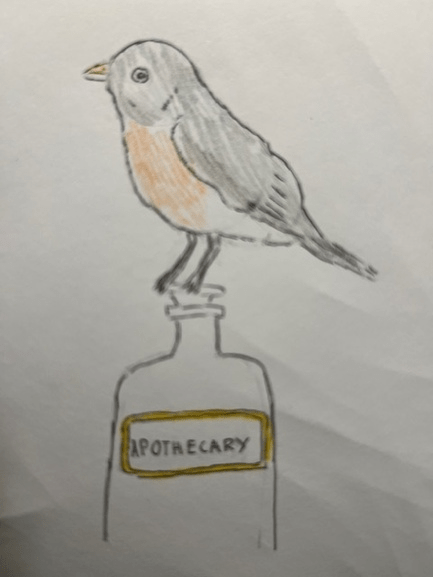
As a child, my primary interactions with fantasy were through books. I enjoyed exploring new worlds through series such as The Apothecary, Erth Dragons, Percy Jackson, and Harry Potter. Maile Meloy’s The Apothecary series in particular had a major impact on how I viewed fantasy. The other fantasy series I had read up to this point mostly focused on either mythic or more traditional fantasy aspects. In contrast, The Apothecary series was a historical fantasy which stressed to me the importance of both imagination and discovery.
The Apothecary series takes place in the early 1950s following World War II and during the Red Scare. After Janie, the series protagonist, moves to London, she meets the Apothecary and his son Benjamin. When the Apothecary is kidnapped, Janie joins forces with Benjamin and the apothecary’s colleagues to rescue him and stop a nuclear test endangering the people of Nova Zembla. The group accomplishes this using the Pharmacopoeia, a magical book of alchemical secrets which allows the group to shift into birds and turn invisible.
The historical backdrops influence on the character’s motivations throughout the series demonstrated to me fantasy’s ability to explore history and give a window into the realities and anxieties of different time periods. The Apothecary series also stood out to me due to its complex, intelligent female characters. I related to Janie as a young girl who wished to use science to help people and enjoyed her and Jin lo’s work in desalination becoming central to the plot of the series. The blend of science, clever writing, and magic working together to make this series unique emphasized to me how important imagination could be: turning theory to reality in both a literary and scientific context.
Fantastical Infrastructure
I love seeing how imagination can turn ideas into new worlds complete with their own languages, religions, magical systems, buildings, politics, and more. One of my favorite aspects of fantasy has always been the infrastructure that brings fantasy worlds to life or their “world building”. Before ENGL 1102, I always thought of world building as a catch all term containing all the broad details of the setting and the little systems and quirks that made up the fabric of a new world. It was interesting to start learning about the distinctions between authorial, critical, and readerly world building (Ekman and Taylor). I look forward to continuing to gain experience with analyzing fantasy world building through ENGL 1102.

An example of an aspect of world building I have found interesting as a reader is the development of the magic system of the Grishaverse and how large-scale reactions to Grisha relate to the cultural and religious values of the different nations within this world. For instance, the Kerch Merchant Council largely view the Grisha as tools to be exploited for financial gain mirroring the Kerch’s religious focus on Ghenzen and success in industry and commerce being seen as holy. In contrast, the Fjerdan Drüskelle view Grisha as an unnatural affront to Djel that needs to be eradicated and a threat to their ordered, patriarchal way of life.
The reactions of different nations to the Grisha’s power being shaped partially by religion demonstrates how aspects of fantasy world building can also give us a new perspective on issues in our world such as religion being abused to control others and especially women. The ability to gain a new perspective on our own world through the exploration of a fantastical one is one of my favorite aspects of the fantasy genre and its world building.
Transforming the Tedious to Thrilling
Another fantasy series I have engaged with recently that I think effectively uses a fantastical world to examine meaningful issues within our own is The Good Place. Though there are less traditional fantasy elements than other fantasy works, this series very much draws on creating new worlds and systems for its commentary. Fantasy elements such as Janets, demons, the JearimyBearimy time system, and the afterlife points system are used to analyze and comment on moral philosophy, personal growth, and what it means to be a “good” person in a world of unethical institutions.
I think The Good Place is a great example of fantasy’s ability to make complex topics engaging as well as easier to understand and interact with. In episodes lasting about half an hour, exploration of a fantastical afterlife allows The Good Place to delve into everything from the doctrine of double effect to John Locke’s theory of personal identity (Gutoskey). The fact that The Good Place is able to remain such an absorbing series while regularly investigating intricate moral phenomena is a testament to the effectiveness of the fantasy genre in bringing new interest to concepts and perspectives sometimes considered obscure or tedious.
Understanding the Power of Fantasy
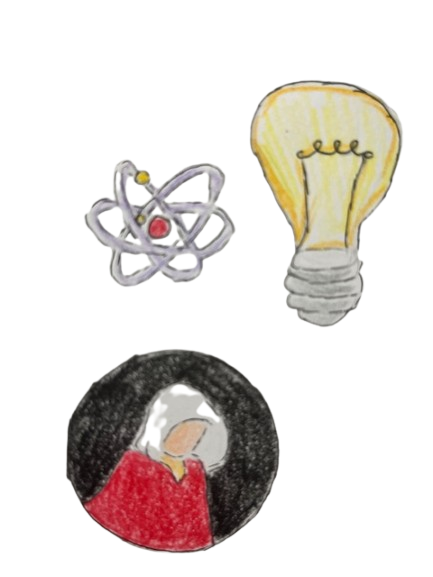
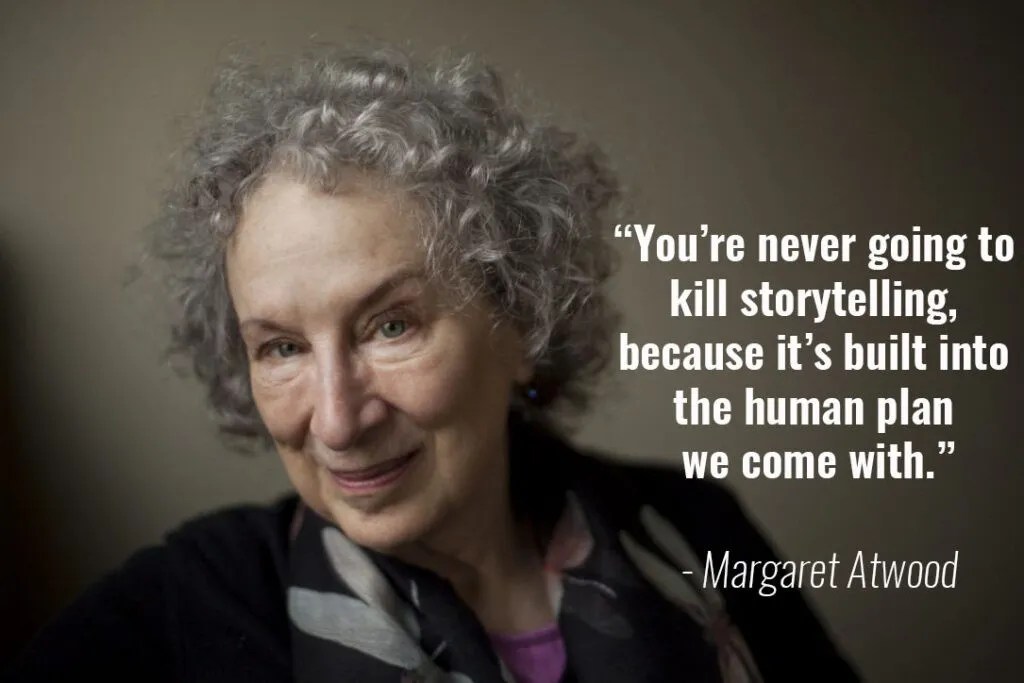
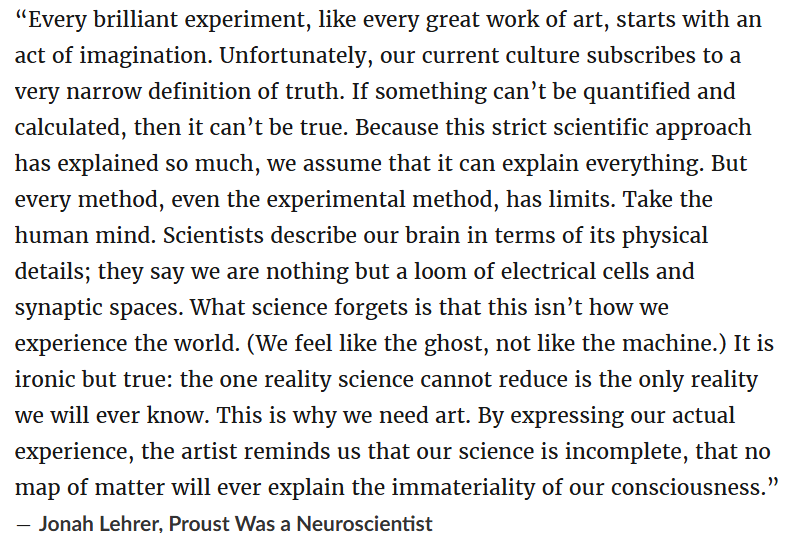
In the concluding section of this blog post, I would like to reflect on what I see as the staying power of the fantasy genre through the lens of two quotes. Margaret Atwood’s quote speaks to the cruciality of the ability to imagine and fantasize to human existence and progress. Atwood’s quote resonates with the fact that fantasy is vital to what makes us human: storytelling is inextricable from our existence allowing us to interpret our present, reflect on our past, and build towards the future of our imagination.
John Lehner’s quote further highlights the power of imagination in transforming the future through both art and science. Lehner showcases that without the kind of artistic thinking engaging with fantasy inspires our understanding of the world will always remain incomplete. When we engage with the fantastic as readers, authors, or critics we strengthen our imagination and thus our ability to ideate. The improved strength of imagination regularly engaging with fantasy provides allows us to further create and theorize meaningfully instead of getting stuck in hollow, incomplete cycles.
To conclude, I see fantasy as above all transporting: allowing us to explore imaginative worlds and sparking a path to visionary ideas we can use to understand and better ours.
Sources
Images from this post were hand drawn.
Works Cited
Bardugo, Leigh. Crooked Kingdom. Henry Holt And Company, 2016.
—. Six of Crows. Henry Holt And Company, 2015.
Gutoskey, Ellen. “5 Moral Philosophy Concepts Featured on the Good Place.” Www.mentalfloss.com, Mental Floss, 26 Sept. 2019, http://www.mentalfloss.com/article/600054/the-good-place-moral-philosophy-concepts. Accessed 29 Sept. 2025.
Meloy, Maile. The After-Room. Penguin, 2017.
—. The Apothecary. Penguin, 2011.
—. The Apprentices. Penguin, 2013.
Stefan Ekman, and Audrey Isabel Taylor. “Notes toward a Critical Approach to Worlds and World-Building.” Journal.finfar.org, Fafnir – Nordic Journal of Science Fiction and Fantasy Research, 9 Oct. 2016, journal.finfar.org/articles/notes-toward-a-critical-approach-to-worlds-and-world-building/. Accessed 29 Sept. 2025.
Weng, Jude. The Good Place – Season 2. Television Series, 7, NBC Broadcasting, 2 Nov. 2017.
—. The Good Place – Season 3. Television Series, 9, NBC Broadcasting, 6 Dec. 2018.

 Fantasy Literacy Blog Post
Leave a comment